
Prices Are Rising Faster Than Paychecks
The Pitch: Economic Update for Thursday, May 14th, 2026

Friends,
This week we’re exploring the numbers behind the jobs report, explaining why cutting gas taxes won’t solve the affordability crisis, and sharing an exciting new source for middle-out economics news.
But first, we have to address this week’s awful news about prices. “The Consumer Price Index rose 3.8 percent in April from a year earlier,” wrote Lydia DePillis at the New York Times on Tuesday, noting that the metric is “up from a 2.4 percent annual increase before the conflict started in February and a 3.3 percent increase in March.”
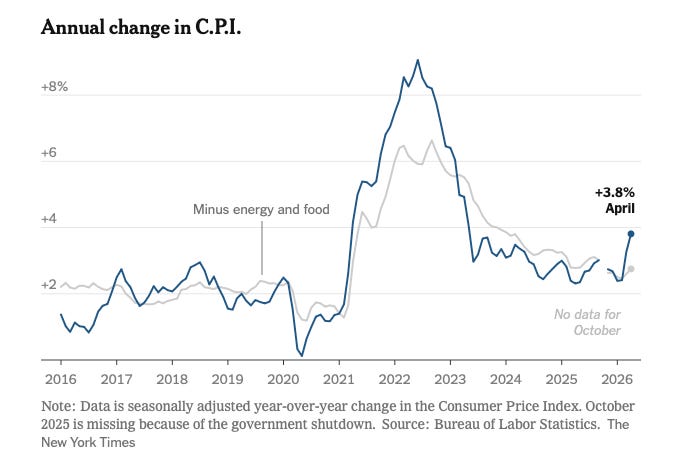
The inflation rate, which climbed at the fastest rate since May of 2023, “was driven largely by energy prices, up 3.8 percent just since the previous month and nearly 18 percent from a year earlier,” DePillis writes. Of course those prices were led by skyrocketing energy prices, caused by the closure of the Strait of Hormuz in March. The price of gas increased 54.3% over this time last year and gasoline is up 24.8%.
The problems in the inflation report were caused by more than just the Iran war, DePillis notes. When “stripping out volatile food and energy prices” from the topline numbers, the calmer so-called “core” inflation metric “also rose 2.8 percent over the year in April, up from 2.6 percent in March.” That means rising gas prices aren’t the only problem—underlying price pressures seem to have been on the rise before the Strait of Hormuz closed.
Ken Foster, an agricultural economist at Purdue University, confirmed to the Associated Press that he believed the rising grocery prices we saw in this month’s inflation report predate the Iran war. “We’re cautiously waiting to see what the June numbers and the May numbers might show as they come out in terms of ... the extent to which energy shocks in the Strait of Hormuz and shipping blockades and so forth are going to impact food prices,” Foster said.
Yesterday, we saw another terrible metric for prices: “U.S. wholesale inflation came in hot last month,” Paul Wiseman writes at the Associated Press. “Producer prices rose 6% from a year earlier, the highest point in more than three years.”
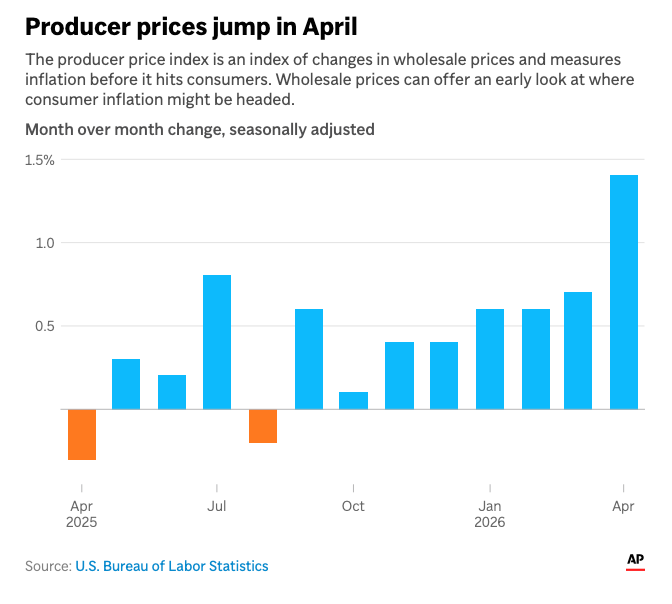
This is especially bad news because the Producer Price Index tracks wholesale prices—meaning the prices of raw materials that manufacturers combine into products and then distribute. So it’s often an indicator of higher prices heading down the pipeline toward consumers in the months ahead.
Like the core reading from the Consumer Price Index, when you remove skyrocketing energy prices from the Producer Price Index, Wiseman notes that the PPI still “rose 1% from March and 5.2% from April 2025.” Prices were almost certainly on the rise even before we shut off 20% of the global oil supply and much of the world’s fertilizer.
High prices aren’t a new story in 2026, but after four decades of essentially steady 2% inflation, the past four years of elevated prices have felt particularly tough for Americans. There hasn’t been any respite at grocery stores, restaurants, retail stores—and now, gas stations. There’s no end in sight to these latest price surges.
Most importantly, we’ve also crossed a significant line that makes these rising prices feel even worse: Paychecks are growing slower than inflation. Your wages aren’t keeping up with rising prices.
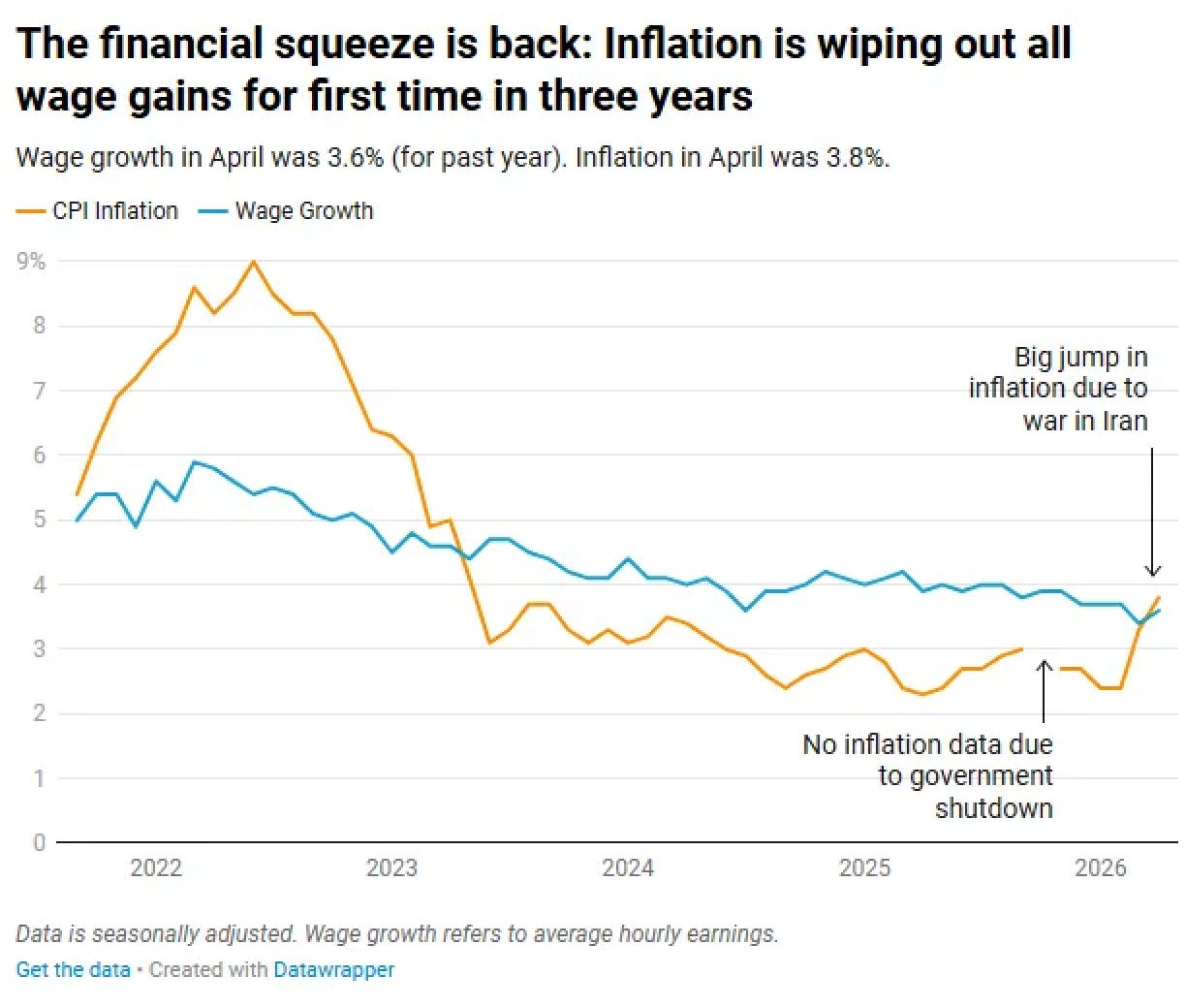
In fact, Mike Konczal pointed out that rising inflation has wiped out the last year’s worth of real wage gains in the past two months alone. Economist Arindrajit Dube puts that into wider perspective: “The average hourly wage for private-sector workers in April 2026 was $37.41,” he writes. “When Trump took office in January 2025, it was $37.35 (adjusted for inflation).”
That means that “There has been essentially zero real wage growth under Trump 2.0,” Dube writes.
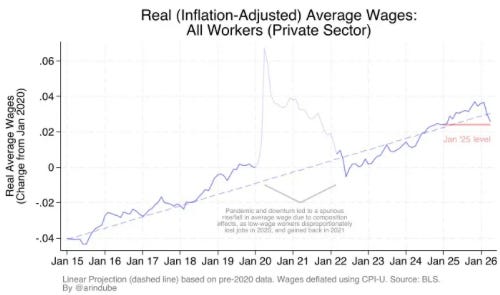
That’s a long time for American workers to go without a raise—especially with prices rising due to tariff pressures and now the war in Iran. This is especially important since worker paychecks are the real job-creating mechanism in the economy. That diminished spending is probably already resulting in fewer jobs being created in communities around the country. In the next section of the newsletter, we’ll look at how all these numbers are impacting the workforce more directly.
Every other American president in my lifetime would likely consider these numbers to be an emergency situation for the economy. That’s why it was especially startling to see President Trump state flatly earlier this week that “I don’t think about Americans’ financial situations” when planning his next move in Iran.
No matter what your preferred political party might be, you have to admit that Trump’s response does not meet the moment. The stagnant paychecks of workers are losing ground to prices and nobody in the White House seems to have a plan of action to change course. Every month that American paychecks falter is another major blow to our economy.
The Latest Economic News and Updates
Is the Economy Really Working for Workers?
Economic pundits treated last Friday’s jobs report as a positive note for American workers. “Job creation remained solid in April, as businesses shrugged off uncertainty brought on by the war in Iran and higher gas prices,” Sydney Ember wrote at the New York Times. “Employers added 115,000 jobs last month, surpassing expectations. The unemployment rate remained at 4.3 percent.”
While the labor market did add jobs in April, the underlying numbers in the report displayed a weakness that many reporters missed. As we noted in the introduction to this newsletter, Navy Federal Credit Union economist Heather Long points out that “Inflation is wiping out wage gains,” which she characterizes as “the big Achilles Heel in the US economy.”
“Wages are being eaten up by inflation due to the war in Iran. This is a big shift from the past several years when wages were growing well above inflation,” Long reports. “Yes, workers have jobs, but this is a squeeze.”
Tax advisory firm KPMG’s chief economist, Diane Swonk, notes that the unemployment rate stayed steady in April, but it did so “for the wrong reasons. Participation in the labor force continued to drop,” Swonk explains.
In the report, “Men over 55 left the labor force along with prime-age women,” Swonk writes. It’s getting harder to find work, and that, combined with other economic pressures, are forcing these workers to abandon the prospect of employment. “About half of all unpaid elder care providers are men, while women with a bachelor’s degree or higher and small children have been leaving the labor force,” Swonk explains. That’s because “Childcare is expensive, while some of the flexibility we saw post pandemic and accompanying rise in work from home are being replaced by return to office mandates.”
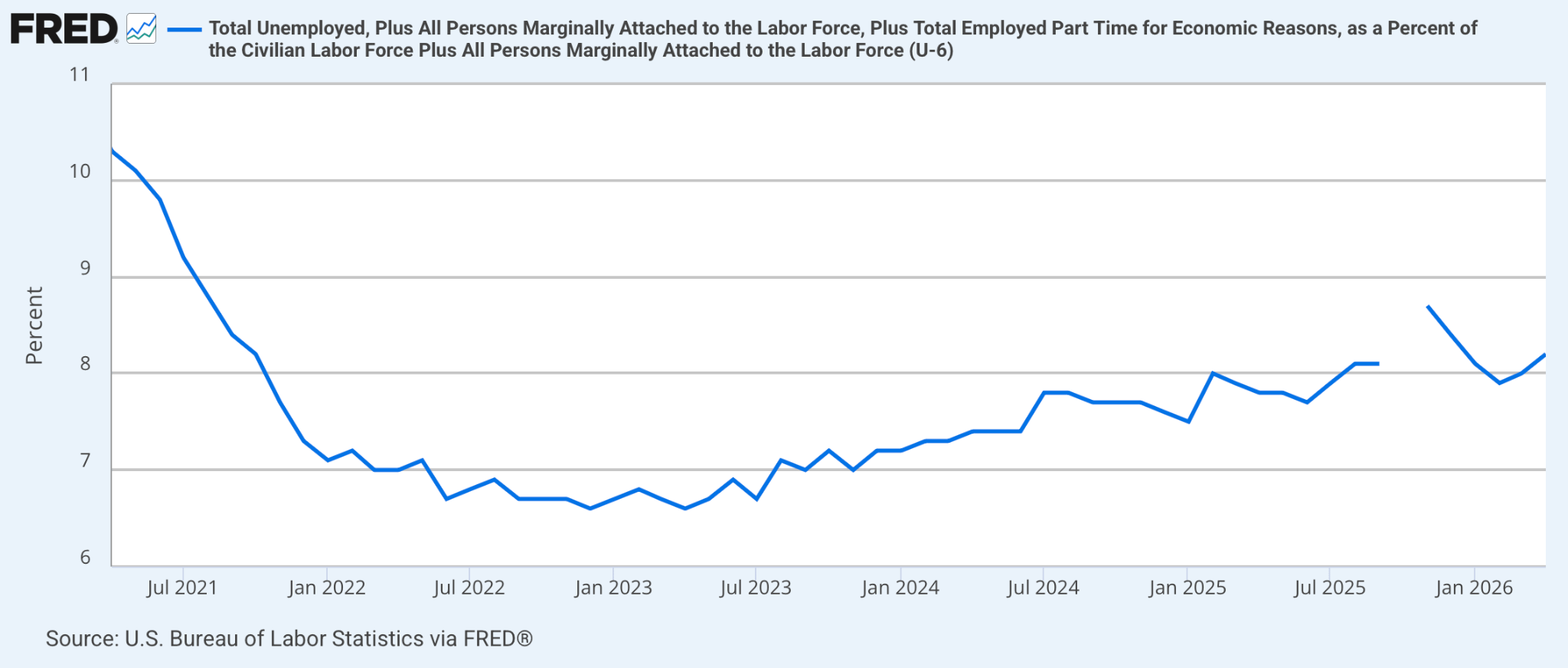
Swonk estimates that “Under the hood, the U6 or more holistic measure of unemployment, jumped to 8.2%, its highest in five months.” The U6 unemployment rate is a broader lens that captures pretty much all potential workers in the US, including people who would ordinarily work but have instead given up on finding employment. That rate is higher than any time since the early days of the pandemic:
Edgy economics website Zero Hedge explained that most of the job gains in April’s jobs report came from the healthcare sector—remember, healthcare needs a massive influx of workers to deal with the increase of problems caused by America’s aging population. The economy lost 2000 manufacturing jobs last month, and the manufacturing sector has now lost 73,000 jobs total over the past year. One underreported piece of data is that information jobs, meaning jobs in the tech sector, have been declining since 2024 and have seen an especially pronounced drop off over the last six months. :
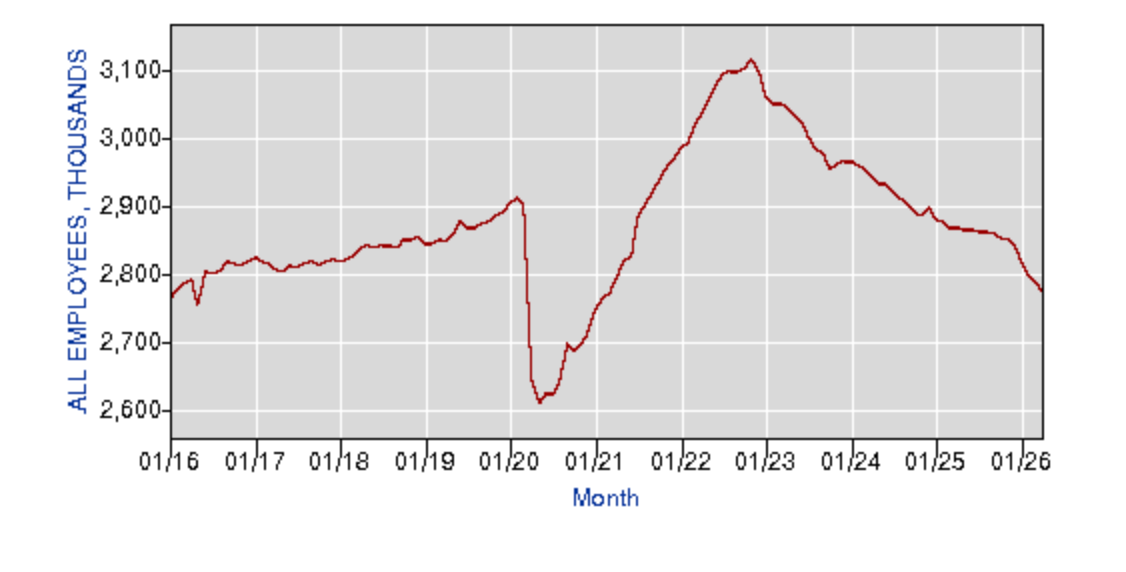
Is this just a matter of tech companies laying off workers who they hired during the pandemic to deal with the problems caused by an excessively online population during lockdowns? Or is it the first wave of layoffs caused by AI disruption?
Zero Hedge also notes that “full-time jobs in April plunged by 424K, while part-time jobs surged by 123K.” So people are falling out of the workforce to care for their families, certain sectors are nosediving in terms of job losses, and hundreds of thousands of Americans are under-employed.
All these problems, especially when combined with the flattening of paychecks and the spiking of prices that I noted previously, combine to paint a pretty bleak picture. “Americans are increasingly leaning on credit cards and loans to absorb rising costs, with consumer borrowing posting its biggest monthly jump in March since late 2022,” writes Zachary Basu at Axios. “The personal savings rate fell to 3.6% in March, its lowest level since 2022, as lower-income households burn through savings to cover essentials.”
So while major media outlets reported that the labor market showed signs of strength on Friday, the data don’t really back that optimism up. And the American people know it, which is why the University of Michigan Consumer Sentiment Index recently reported the lowest-ever consumer sentiment scores in history.
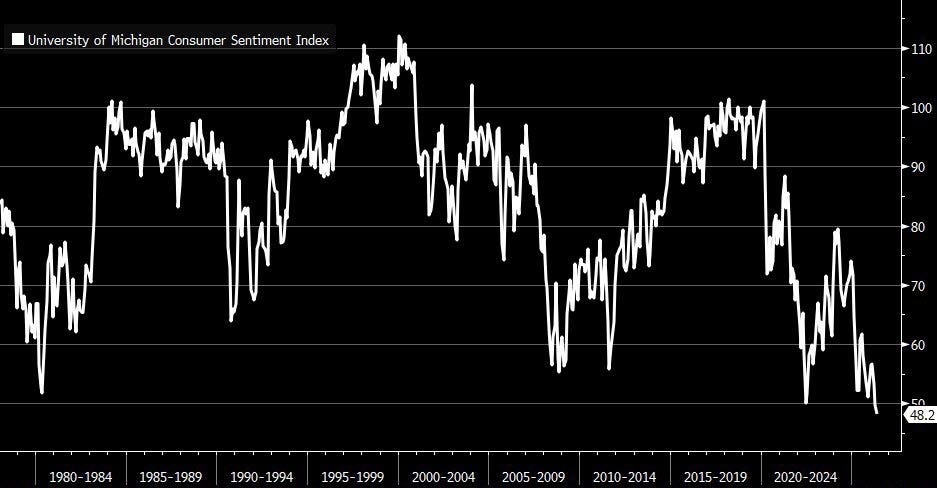
The topline numbers of the jobs report might be showing an economy that’s still benefitting American workers, but the American people don’t find that evidence to be especially compelling.
Confessions of a Class Traitor
I wanted to call your attention to a new YouTube channel that will focus on explaining how the economy really works. It’s hosted by Civic Ventures founder Nick Hanauer, and it will also feature video explainers from CV fellows David “Goldy” Goldstein and Paul Constant. To give you a sense of the tone, the name of the channel is Nick Hanauer: Class Traitor.
On the channel, Nick will use his experiences as a founder and investor in dozens of small businesses (including as the first nonfamily investor in Amazon.com) to explain how wealthy people like him have managed to rig the system in their own favor. He’ll also explain how the economy really grows—here’s a hint: it’s not because wealth trickles down from the wealthy few—and how we can make the American worker the true center of the economy again.
Or as Nick explains, his goal with the channel is nothing less than to “expose the myths driving wealth inequality and make the case for a new economics—where a thriving middle class, not plutocrats, is the true engine of growth.”
In the launch video for the channel, Nick explains that the real threat of the artificial intelligence boom isn’t the rise of a world-destroying AI overlord. Instead, he makes the case that the super-rich monopolists who lead Big Tech are using AI to increase their control over the economy, expanding inequality even more than it already has.
We’ll also be posting Paul’s video explainers, and making plenty of room for Goldy’s irreverent takedowns of conventional economic wisdom. That means you can expect plenty more videos in the vein of Goldy’s attack on the Economist’s faulty argument that raising the minimum wage kills jobs:
I hope if you like what you see on the Class Traitor channel that you’ll subscribe for future updates. If you find these videos to be as informative and entertaining as I do, I hope you’ll share them on social media. It’s important to spread the word about middle-out economics in as many ways as possible—to meet people where they are.
This channel is an important next step to help people understand that the economy is a story we tell ourselves, explaining who gets what and why. If enough people understand that we can change the current, failing economic paradigm into one that understands where economic growth actually comes from, we can establish a new era of American prosperity that works for everyone—not just a handful of people at the top.
This Week in Trickle-Down
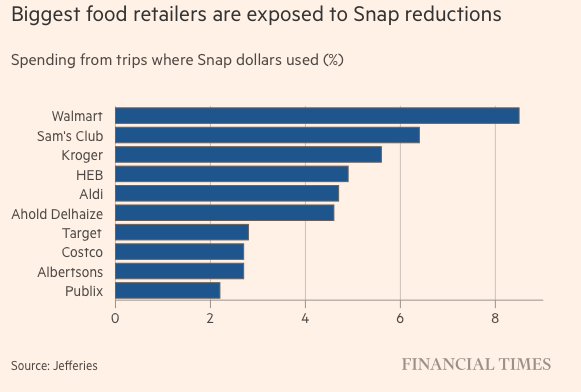
Last week, I wrote about millions of Americans falling (or more accurately being pushed) off the SNAP rolls. Now, for the Financial Times, Gregory Meyer writes that food brands and grocery stores are starting to feel the loss: “Kraft Heinz and supermarket operator Ahold Delhaize have disclosed that lower demand from recipients of America’s Supplemental Nutrition Assistance Program, or Snap, had dented sales, and more food manufacturers and retailers were expected to follow,” Meyer writes.
This Week in Middle-Out
At EPI, Jennifer Sherer explains how the governors of Virginia and Colorado can undo decades of anti-union legislation in their states by passing a handful of pro-union policies into law.
The Roosevelt Institute has put together a snapshot of what America’s labor force is likely to look like ten years from now. “Over the next decade, the occupations with the most projected growth are home health and personal care aides (approximately 600,000 jobs by 2034) and fast-food and counter workers (approximately 200,000 jobs by 2034),” Roosevelt reports. “Both of these jobs are currently performed by a predominantly female and disproportionately non-white workforce, the majority without college degrees.” That means it’s vital to establish policies now that ensure those workers have bigger paychecks and better protections in place, in order to ensure that the whole economy is stronger.
David Dayen explains how New York City Mayor Zohran Mamdani inherited a twelve billion dollar deficit but still managed to balance the city’s budget without cutting any investments in New Yorkers. Remember this story the next time a state or city leader tries to tell you that austerity measures are the only way to make budgets work.
This Week on the Pitchfork Economics Podcast
Mother Jones journalist Tim Murphy joins Nick and Goldy this week for a wide-ranging conversation about AI data centers. What does it mean for communities when a gigantic warehouse the size of Central Park gets built in their back yard? Do these data centers represent a next step in the AI revolution, or are they just another tool for growing the wealth of a handful of already-wealthy tech plutocrats?
Closing Thoughts
As gas prices continue to rise, two very different politicians proposed ending or pausing the federal gas tax to lower the cost of gas.
“President Trump said in a phone interview with CBS News Monday morning that he aims to suspend the federal gas tax,” writes Nancy Cordes. “But suspending the excise taxes — 18.4 cents per gallon on gas and 24.4 cents a gallon on diesel — requires an act of Congress, and pausing it would cost the federal government about a half billion dollars a week.”
On the opposite end of the political spectrum, progressive Maine senatorial candidate Graham Platner also proposed ending the tax on gas, along with a few additional policies: “U.S. Senate candidate Graham Platner wants to eliminate the federal tax on gasoline and diesel fuel, freeze electric rates and fund clean energy developments,” writes Peter McGuire at Maine Public.
“A cornerstone of the plan is to cut the 18 cent per-gallon tax on gasoline and 24 cent per-gallon tax on diesel charged by the federal government,” McGuire continues. “The plan also calls for a 50% per-barrel windfall tax on big oil profits and a national freeze on electric rate increases.”
It may seem at first blush like a middle-out policy to revoke gas taxes—after all, doing so puts more money in the pockets of workers. Middle-out economics is built on the premise that working Americans are the engine of the economy and raising paychecks of working Americans is the best thing you can do to broadly grow the economy in a way that works for everyone.
However, tax cuts aren’t the best way to grow paychecks. In fact, doing so often benefits big corporations and the super-rich at everyone else’s expense. Cutting gas taxes might put a few more dollars into the pockets of working Americans, but it will also starve infrastructure budgets of revenue and swell the already-bursting profit margins of Big Oil companies.
Really, consumers are unlikely to see even the small return that those tax cuts offer. As Paul Krugman explained back in 2000 when presidential candidate George W. Bush suggested cutting gas taxes to promote consumer spending: “If the price of gas at the pump were to fall, motorists would buy more gas. But there isn’t any more gas, so the price at the pump, inclusive of the lowered tax, would quickly be bid right back up to the pre-tax-cut level,” Krugman explains. “And that means that any cut in taxes would show up not in a lower price at the pump, but in a higher price paid to distributors.” In other words: The tax cut would only serve to grow the profit margins of Big Oil, not consumer spending.
So no, repealing gas taxes isn’t the best way to grow the economy for working Americans. Platner at least gets credit for his proposals to tax the windfall profits of Big Oil and freeze other energy costs for Americans while also encouraging clean energy production.
Progressive candidates in general need to stop trying to score populist points by floating massive tax cuts. This is turning into a trend. Earlier this year, Democratic politicians started floating big tax cuts. “New Jersey Senator Cory Booker, for example, wants to more than double the standard deduction to $75,000 for married couples,” the Boston Globe explained in March. “Maryland Senator Chris Van Hollen wants to exempt individuals making $46,000 or less and couples making $92,000 or less from paying federal income tax. And California gubernatorial candidate and former representative Katie Porter is promising to eliminate state taxes for families earning less than $100,000.”
After four decades of trickle-down talking points that argue that every tax dollar is onerous and unnecessary, it’s disheartening to see some of the most progressive politicians of our time walk into this trap. Tax money is how we pool resources to deliver on the public good. The gas tax cut would cost tens of billions of dollars of revenue for transportation projects, and Booker’s proposed plan “would cost $5.4 trillion over 10 years even when accounting for the proposal’s tax increases on higher-earners,” the Globe explains.
I like how the Globe points out that not all tax cuts are created equal: “It may be true that most people don’t like to pay taxes, but if they’re getting good services in return — and a robust social safety net that makes sure no one falls through the cracks — then it’s a cost they should be willing to bear. If government is good, then taxes are worthwhile,” they write.
The tax code does need a lot of work. “A progressive income tax system — where the more money you make, the larger the proportion of it you pay — is still the fairest way to raise revenue and redistribute wealth,” the Globe writes. “But building a strong and sustainable social safety net requires that everyone do their part.”
The tax code absolutely needs to be rewritten so that the wealthiest people and corporations pay a lot more into the system. We need to ensure that money made from investments, mergers, and other high-finance tricks are taxed more than money earned from a hard day’s work. And we definitely need to increase taxes for Big Oil companies that have been raking in record profits at the same time that gas prices have been soaring.
But we also need to remember that the people who suffer most when taxes get cut and government programs get weaker are working Americans. The only people who benefit from massive tax cuts are the super-rich.
Be kind. Stay strong.
Zach